Tinted is a type of film that is used to prevent heat from entering the car so that the interior is always cool and comfortable when driving. But there are some films made by placing the brightness of the tinted film to maintain privacy in the car. However, is this tinted really worth it for our daily use? The answer is yes. Because it not only prevents heat from entering the car but can reduce the glare from the scorching sun during the afternoon or peak hours in the evening. Some use it to protect their hands from the dark when holding the car steering wheel. But you have to remember, even though you can darken the tinted, it doesn't mean that the tinted is completely dark to the point of not being visible at all. Only the back is completely dark. For the front part which is only a few percent allowed by JPJ. According to the JPJ act for light transparency rules, for the front mirror only 70%, for the front side mirror only 50%, and for the rear side mirror and rear mirror an...
 |
| Brake Pad |
Every
year, the current vehicle is becoming more modern with features that can be safe not only for the driver but around us with the presence of good sensor
functions. Today, I will tell you how to use and how care for the life of
this component. For those who don't know, this brake pad is one of the
components that gives grip to the disc's rotor when we press the brake to slow
down or stop. This is because these brakes can help us to reduce speed, avoid
accidents to reduce high vehicle repair costs.
Brake
pads are made of graphite, iron, steel, and also copper. Brake pads also have
three types, namely organic, ceramic and semi-metallic. The selection of these
brake pads should be durable and have a good grip for braking because each
brand has a different price and quality for each drive.
1. Organic
Brake Pads
Most new cars sold are fitted with organic brake pads from the manufacturer. These pads are also known as non-asbestos organic (or NAO) pads. They were developed as an alternative to the asbestos pads used years ago. Although some vehicles come from the factory with other types of pads, when someone refers to OEM brake pads, they usually mean organic pads. Organic brake pads are made of materials such as glass, fiber, rubber, carbon, and even Kevlar mixed with resins to bond them together.
Organic brake pads are usually the least expensive choice when it is time for a brake job. They are relatively “soft”, quiet, and gentle on your brake system, and they are a good choice for daily driving. But they wear out quicker than other types of pads and produce significant amounts of dirty brake dust. And because they are softer, they require a bit more effort against the brake pedal. They also do not tolerate overheating very well and are therefore not a good choice for performance use. For all-around use, they are just fine.
PROS:
- Soft pedal
- Gentle on brake system components
- Quiet
- Inexpensive
CONS
- Require more effort when braking
- Wear quickly and require more frequent replacement
- Dirty
- Not suited for performance or heavy-duty use
 |
| Organic Brake Pad |
2. Semi-metallic
Brake Pads
If your car did not come with organic brake pads from the factory, it likely bore semi-metallic pads, especially if your “car” is a truck or large SUV. Semi-metallic brake pads are made up of metal shavings: copper, steel, brass (and maybe some graphite thrown in) and bonded with resin. They are best suited for heavy-duty or performance use, although they can also be applied to daily driving.
Semi-metallic brake pads have the greatest amount of stopping power. They are also heat resistant and work over the widest range of temperatures of the three types of pads described here. They last longer than organic pads, but like organics, they produce a good deal of brake dust. They are also the noisiest, tending to squeal more than other pads. And semi-metallic pads are rougher on other parts of the brake system, especially the rotors. They make for good all-around use and are well-suited to heavy-duty use where noise and wear take a backseat to performance.
PROS
- Solid stopping power for heavy-duty or performance use
- Tolerant of extreme temperatures
- Relatively long-lasting
CONS
- Noisy
- Dirty
- Create more brake system wear
 |
| Semi-Metallic Brake Pad |
3. Ceramic
Brake Pads
If you are looking for a balance of comfort and performance, then ceramic brake pads might be for you. These pads are made mostly of hard ceramic fibers, so they tend to last the longest. And yet, they are quiet and comfortable. They provide a firmer brake pedal than organics and yet do not produce a lot of brake dust, so they are cleaner. Ceramic pads are also the quietest. They handle heat very well, but that heat tends to be transferred to the rest of the brake system. So, they are less aggressive on your rotors, but they make the rotors hotter. They technically do not do as well in extreme cold, although the effects are negligible. Depending on the pad, they could be right for high-performance use, or they may be best for comfortable daily driving. The elevated abilities of ceramic brake pads do come with a cost; they are your most expensive option.
PROS
- Extremely durable and last the longest
- Clean
- Comfortable
- Dissipate heat quickly
- Gentle on brake system components
CONS
- Not suited for heavy-duty use
- Expensive
 |
| Ceramic Brake Pad |
Each
vehicle will have a lifespan according to driving. So, if the brake pads run
out, the signs of the problem will be thin brake pads and making noise when you
press the brakes.
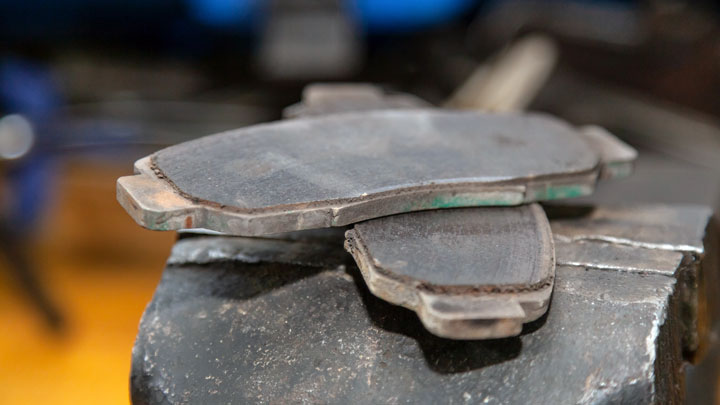 |
| Brake Pad Thin |
So,
if it happens like this, immediately change it and the problem will be solved
to prevent your rotor disc from being damaged
Thank you
good 👍
ReplyDeleteNice information 🔥🔥🔥
ReplyDeleteinfo yang bagus
ReplyDelete